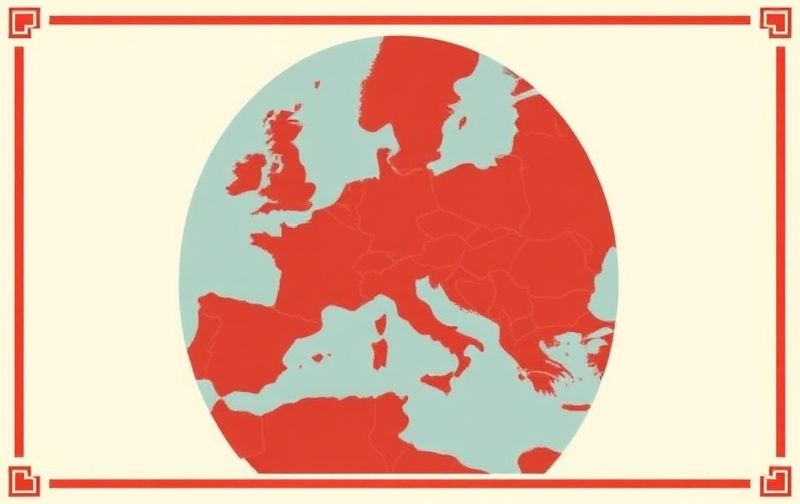
The Byzantine Empire and the Roman Empire are deeply connected, but they also had many important differences. Understanding how the Byzantine Empire evolved from the Roman Empire helps explain changes in politics, culture, and religion across centuries.The Byzantine Empire was essentially the continuation of the Eastern Roman Empire after the fall of the Western Roman Empire in 476 CE. Its capital was Constantinople (modern-day Istanbul), founded by Emperor Constantine in 330 CE. While the Roman Empire once controlled a vast area including Western Europe, the Byzantine Empire focused more on the eastern Mediterranean.
Political Structure Continuity and Change
While the Byzantine Empire saw itself as Roman, its political structure changed significantly over time.
Stronger Centralized Authority
-
The Roman Empire had periods of shared power between the Senate and the Emperor.
-
In contrast, the Byzantine Emperor held almost absolute power, combining political and religious authority.
-
Byzantine rulers were often seen as God’s representatives on Earth.
This level of authority made the Byzantine Empire more stable at times but also more autocratic compared to earlier Roman traditions.
Military Organization
-
The Roman Empire was famous for its legions and military organization.
-
The Byzantines developed new military systems, such as the theme system, where soldiers were given land in return for military service.
-
Byzantine armies also relied more heavily on diplomacy, espionage, and strategic alliances.
Cultural Differences
Culture evolved dramatically from Roman to Byzantine times.
Language Shift
-
Latin was the official language of the Roman Empire.
-
Over time, Greek became the dominant language in the Byzantine Empire, especially after the 7th century.
-
This shift in language reflected deeper cultural changes and separated Byzantium from the Latin-speaking West.
Art and Architecture
-
Roman art focused on realism and civic pride, such as statues of leaders and public monuments.
-
Byzantine art was deeply religious, featuring icons, mosaics, and churches like Hagia Sophia.
-
Byzantine architecture emphasized domes, light, and elaborate decoration compared to Roman engineering like aqueducts and amphitheaters.
Religious Differences
Religion marked one of the biggest divides between the two empires.
From Polytheism to Christianity
-
The early Roman Empire was polytheistic, worshiping many gods like Jupiter and Mars.
-
Christianity emerged during the Roman Empire and became the state religion under Emperor Constantine.
-
The Byzantine Empire was a fully Christian empire, and religion played a central role in government and daily life.
Church and State
-
In the Byzantine Empire, the Emperor had significant influence over the Church.
-
This relationship was called caesaropapism, meaning the emperor acted as both a political and religious leader.
-
In the West, especially after the fall of Rome, the Church became more independent from political rulers.
Religious Conflicts
-
The Byzantine Empire faced internal religious conflicts, such as disputes over the use of religious images (known as the Iconoclast Controversy).
-
These religious debates shaped Byzantine identity and separated it from Western Christianity, eventually contributing to the Great Schism of 1054, when the Eastern Orthodox Church and the Roman Catholic Church split.
Economic and Social Structures
Both empires had complex economies, but there were notable differences.
Economy and Trade
-
The Roman Empire relied heavily on agriculture and slave labor.
-
The Byzantine Empire became a key trade hub between Europe and Asia, dealing in silk, spices, and other luxury goods.
-
Constantinople’s location made it one of the richest cities of the medieval world.
Social Hierarchy
-
The Roman social system included clear divisions between patricians, plebeians, and slaves.
-
Byzantine society also had social classes, but mobility was more possible through military service, the Church, or imperial service.
Military Challenges and Defense
Both empires faced continuous military threats but handled them differently.
Roman Military Expansion
-
The Roman Empire expanded aggressively, building a vast territory that became harder to defend.
-
Over time, overexpansion and external invasions contributed to Rome’s fall.
Byzantine Defensive Strategies
-
The Byzantines focused more on defense and maintaining territory rather than expanding it.
-
They built massive defensive walls around Constantinople and perfected military strategies like Greek fire, a flammable weapon used in naval battles.
Legacy and Influence
Despite their differences, both empires left lasting legacies.
Roman Legacy
-
The Roman Empire influenced law, language, government, and engineering.
-
Concepts like Roman law and republicanism continued to impact the Western world.
Byzantine Legacy
-
The Byzantine Empire preserved many aspects of Greco-Roman culture during the Middle Ages.
-
It protected Europe from eastern invasions for centuries and spread Orthodox Christianity to Eastern Europe and Russia.
While the Byzantine Empire considered itself the true continuation of the Roman Empire, the two developed along different paths. Changes in language, culture, religion, and government marked the evolution of Byzantium into a distinct civilization. Understanding these differences helps highlight the rich and complex history that connects the ancient Roman world to the medieval Eastern Mediterranean.